Most messy kitchens are not short on cupboards. They are short on systems. If you are rummaging for a pan lid, double-buying spices, or clearing the worktop every time you cook, the fixes are usually simple and cheap. You need the right containers, a few specfic add-ons, and a layout that matches how you actually cook.
This guide shows you exactly where to start and what to buy on a modest budget. You will set up zones that make sense, squeeze more from shelves you already have, and pick the affordable bits that pull their weight day after day.
Start With a Ruthless Edit
Clearing space is the cheapest upgrade. Empty one cupboard at a time, group items by type, and remove anything cracked, duplicated, or never used. Be blunt about single-use gadgets that never leave the drawer. Keep the sharp knife that does everything, not three blunt ones you avoid.
Set aside a donation box before you start. If a pan is warped or a storage tub has no matching lid, let it go. A leaner kit is easier to organise and faster to clean.
Map Simple Zones That Match How You Cook
Place items at the point of use. Keep plates and glasses near the dishwasher so they put away in one pass. Store chopping boards, knives, oils, and salt near the prep area. Pasta, tins, and strainers near the hob. Tea, mugs, and kettle together. This trims wasted steps and stops stray items migrating across the room.
Label the inside edge of a shelf until the habit sticks. Cheap masking tape and a marker pen are enough, and it keeps everyone in the house on the same page.
Use Clear, Stackable Containers for Dry Goods
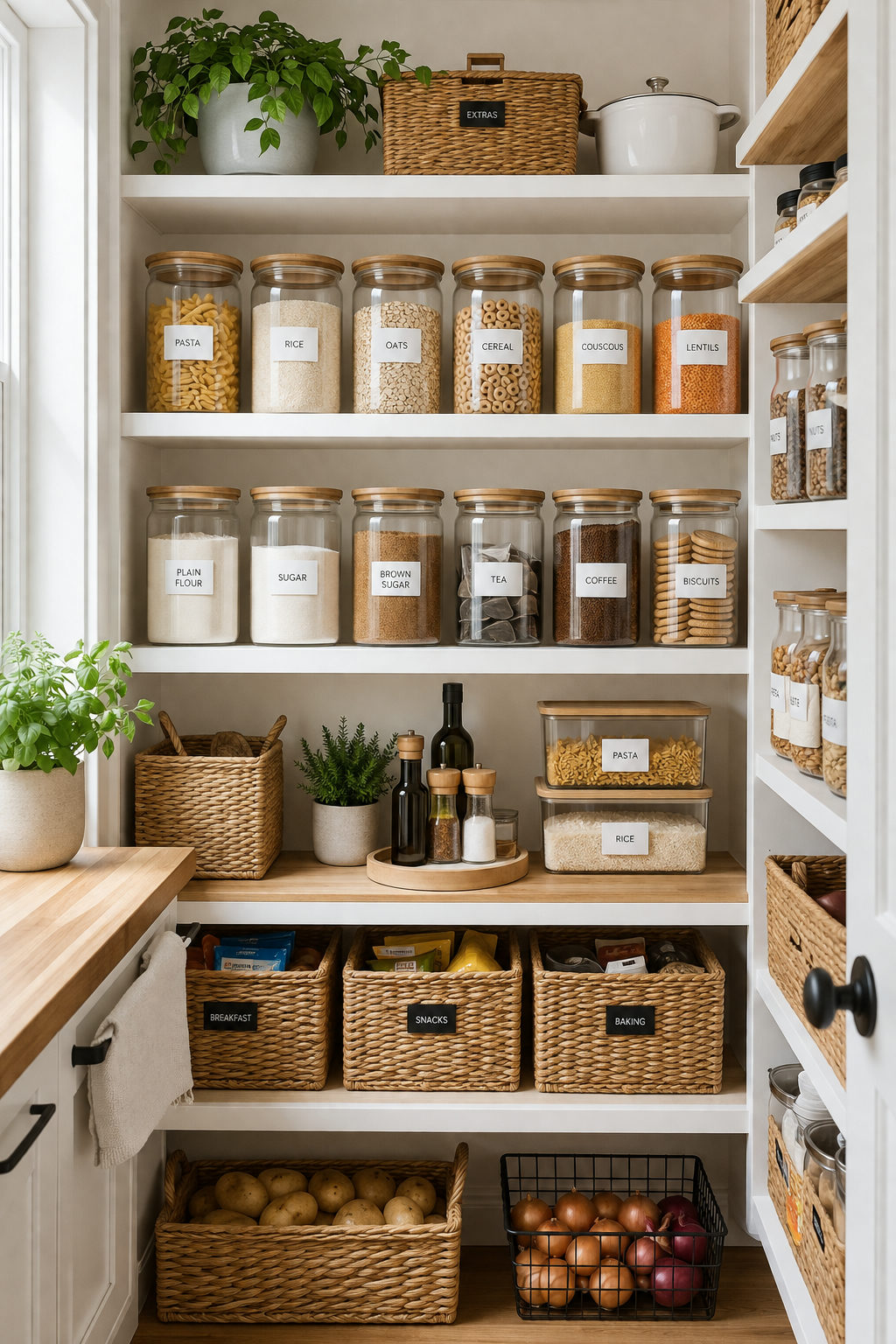
Original packaging wastes headroom and hides what you have. Clear containers stack neatly and show at a glance when rice or oats are low. Go for square or rectangular shapes that tessellate, not round tubs that leave gaps.
Keep it practical: only decant the foods you buy regularly. Add a small label with the food name and cooking notes if needed. A wax pencil or removable label makes changes simple.
ClutterCraft Recommended
Airtight Food Storage Containers
Decant Only What Earns the Space
Not every item deserves a matching jar. Flour, rice, oats, and pasta benefit from airtight storage. Odd baking ingredients used once in a blue moon can stay in their original bag inside a small basket. The aim is easy access for what you reach for weekly.
Use saved glass jars for small volumes such as seeds or loose tea. A strip of painter’s tape and a date written on keeps things straightforward.
Go Vertical With Shelf Risers and Under-Shelf Baskets
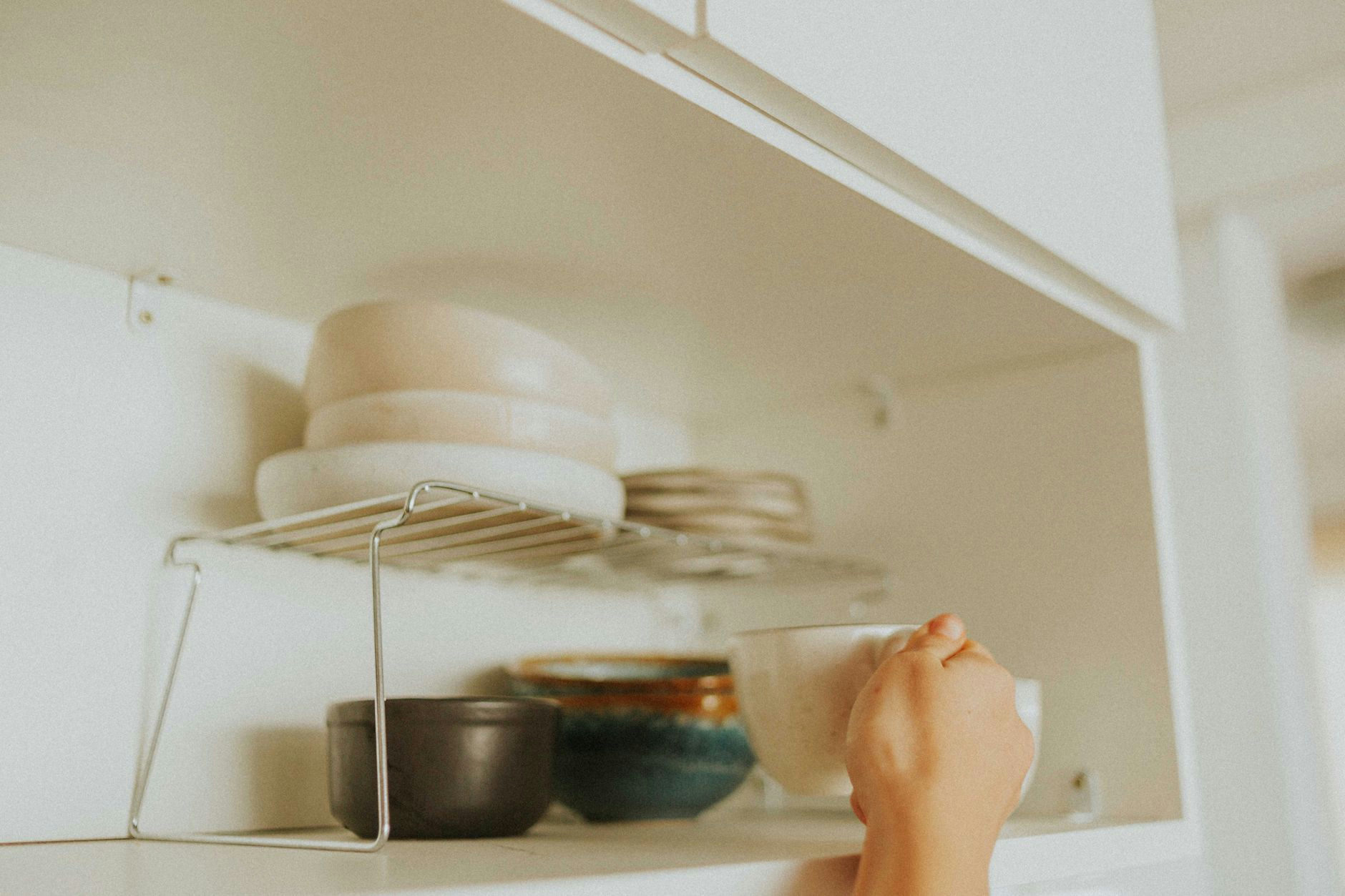
Most cupboards waste the top half of the space. Shelf risers create a second layer for plates and bowls so you can lift out what you need without a stack wobble. Under-shelf baskets hook onto existing shelves to hold wraps, chopping boards, or snack packets.
Pick metal risers with a tight mesh so small items do not tip through. Measure shelf depth so baskets fit without clashing with the cupboard door.
ClutterCraft Recommended
Expandable Shelf Risers
Use the Inside of Doors for Light, Flat Items
Pegboards, shallow racks, and adhesive hooks make use of the back of cupboard doors. Store measuring spoons, oven gloves, bag clips, and foil there so drawers do not jam with odd shapes. A back-of-door rack holds spices and packets where you can see them.
Stick to low-profile fittings so shelves still close. Test any adhesive hook with a tea towel before trusting it with heavier items.
Mount What You Reach for Daily
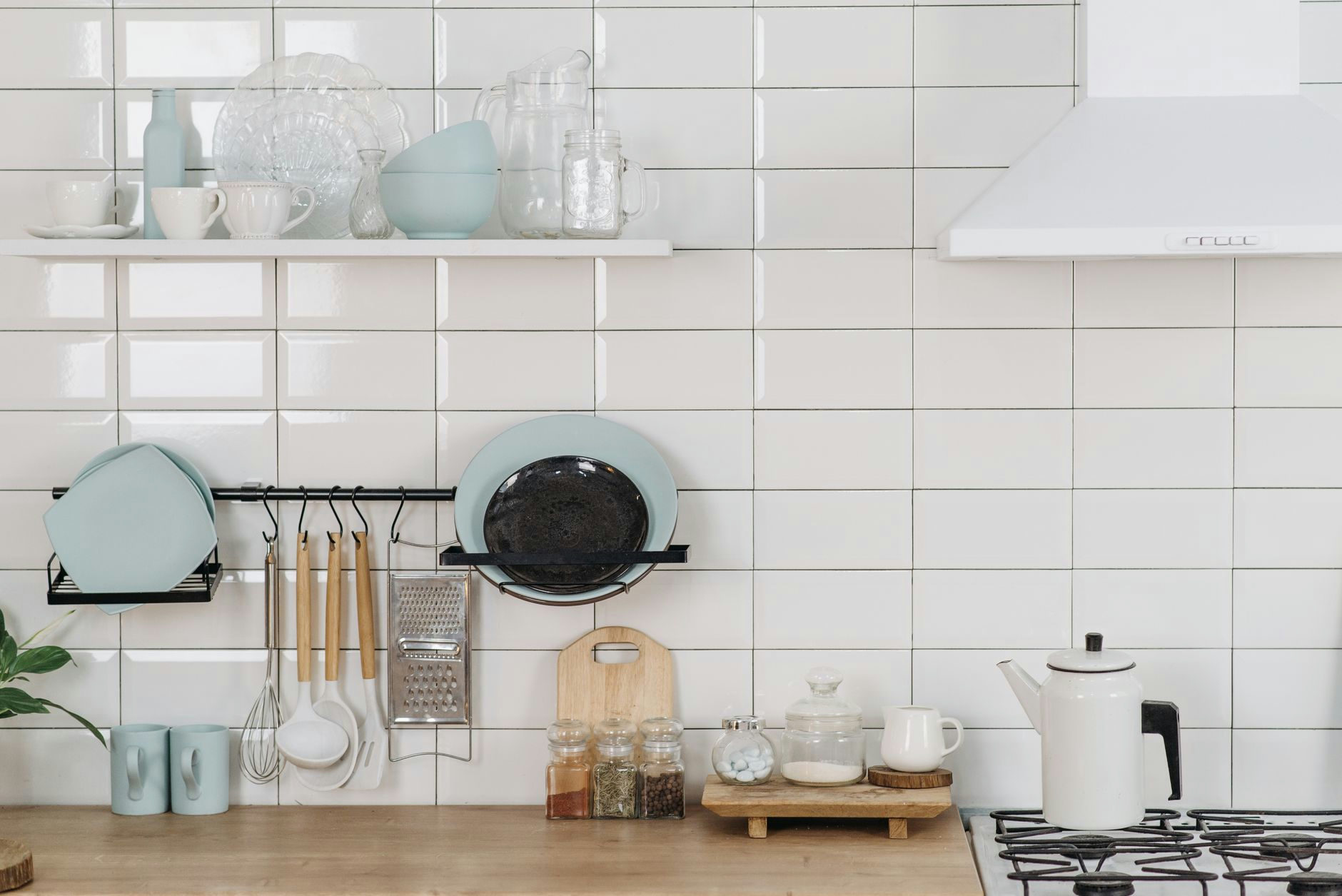
Free your worktop by putting everyday tools on the wall. A magnetic strip holds knives safely, a rail with S-hooks takes spatulas and ladles, and a small shelf keeps oil and vinegar off the surface but within arm’s reach.
If you cannot drill, look for rails designed to span between cabinets or use freestanding utensil pots with dividers so tools do not tangle.
Tame Pans, Lids, and Baking Trays
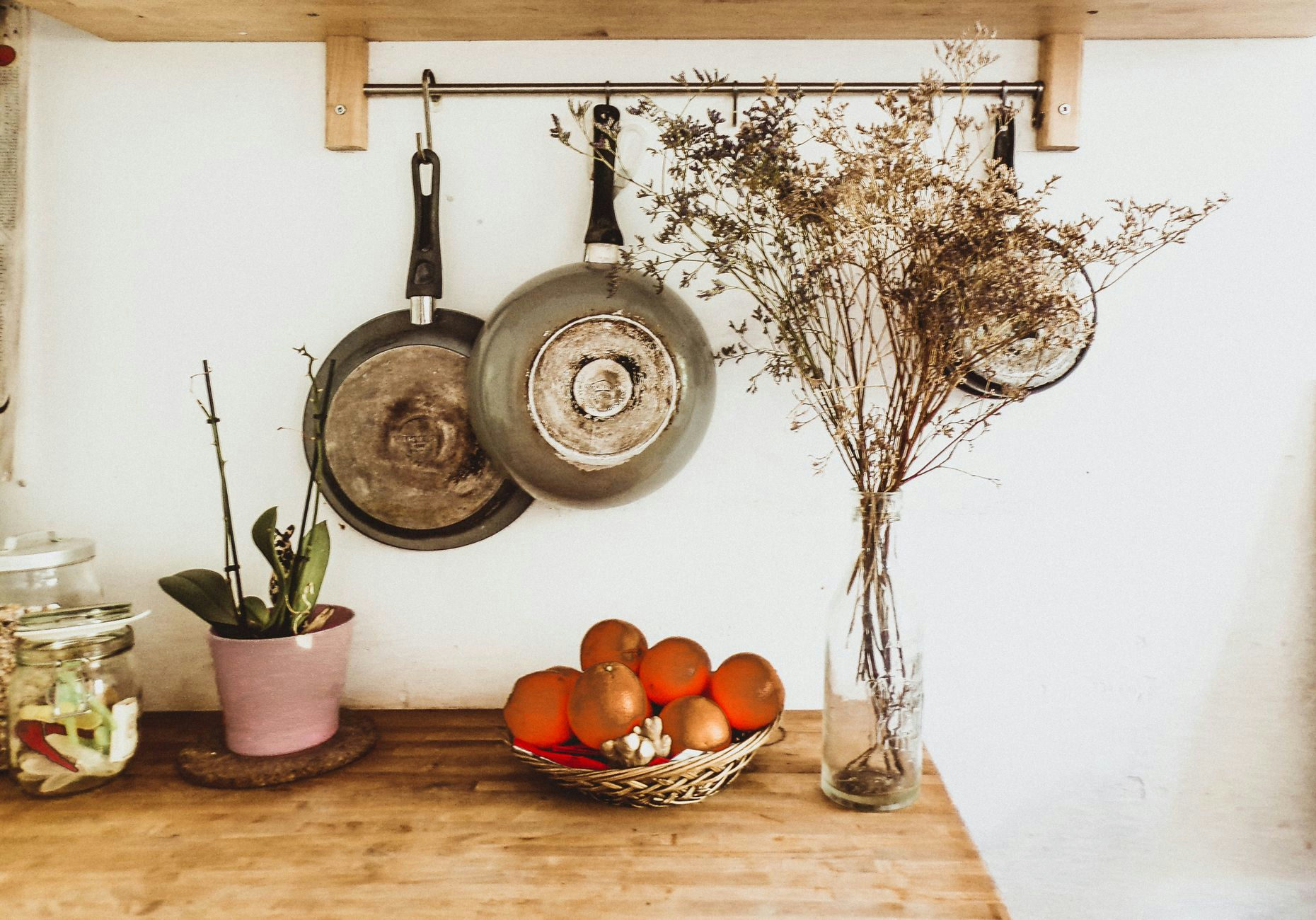
Stacks of pans are noisy and awkward. An expandable rack lets you file pans and lids upright so you can pull one without a clatter. For baking trays and chopping boards, a simple vertical rack or a pair of bookends stops them sliding into a pile.
ClutterCraft Recommended
Expandable Pan and Lid Rack
Use Drawer Dividers You Can Reconfigure
Cutlery trays are fine for forks and knives, but deep drawers become a jumble without boundaries. Spring-loaded dividers or interlocking bins let you size sections for foil, spices, snacks, or gadgets. Leave a small empty zone for the odd item that appears during the week.
Measure drawer height so bins do not foul the runner. Choose solid bases so crumbs do not drift underneath.
Sort the Cupboard Under the Sink
Leaks and pipes make this a tricky space. Use a handled caddy for daily cleaning products so you lift everything out in one go. A tension rod can hold spray bottles by their triggers and keep the base clear for cloths and sponges.
Line the base with a cut-to-fit plastic mat to protect from drips. Store bulk refills elsewhere if you can, to keep this zone simple and quick to access.
Measure Before You Buy
Add a Slimline Trolley Where a Cupboard Will Not Fit
A narrow rolling trolley slips beside the fridge or between units to hold oils, tins, or veg in aerated baskets. Wheels mean you can bring the whole thing to your prep area, then slide it away to keep the floor clear.
Pick wire or slatted shelves for airflow if you plan to store onions or potatoes. Fit a small rail on the side for a tea towel or a roll of paper towel.
Spice Storage That Actually Works
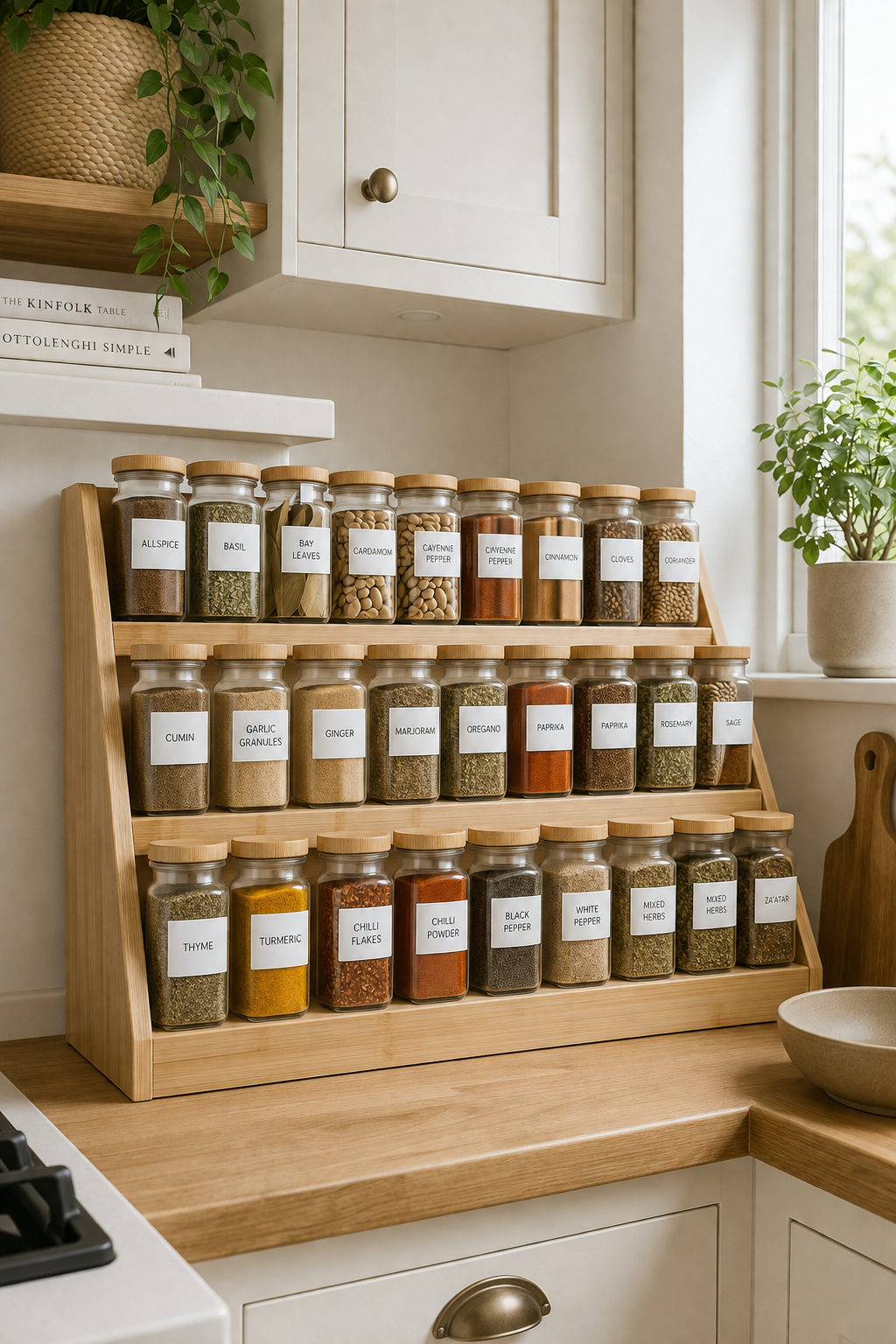
Spice chaos wastes money. Choose one system and stick to it. A tiered shelf in a cupboard lets you see the back row. Magnetic tins on the side of the extractor keep favourites at eye level. If you prefer a drawer, use angled inserts so labels face up.
Group duplicates and decant into a single jar. Write the purchase month on the base so you know when to replace tired flavours.
ClutterCraft Recommended
Expandable Tiered Spice Rack
Keep Worktops Clear by Default
Cheap Labels That Do Not Look Cheap
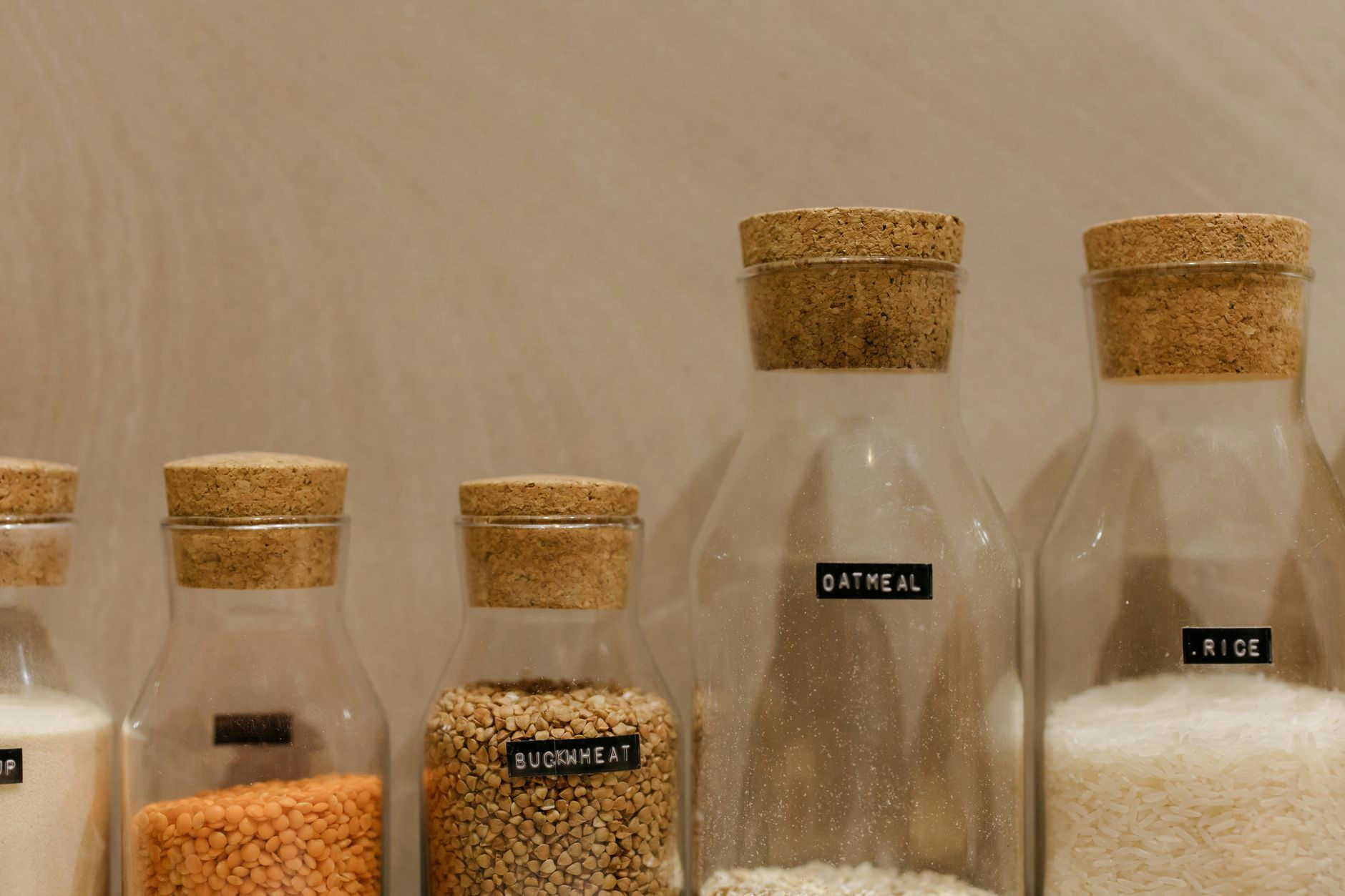
Uniform labels make a scrappy cupboard look considered. Use a fine-tip marker on matte removable labels, or a label maker with a clean font. Place labels low on containers so they read even when stacked.
If you share the kitchen, add short category labels to shelves: Snacks, Breakfast, Baking. This makes everyone more likely to put things back where they belong.
ClutterCraft Recommended
Label Maker
Frequently Asked Questions
What Should I Organise First in a Messy Kitchen?
Tackle the items you touch daily. Clear the worktop, set up a prep zone with board, knife, oil, and salt, then fix the drawer or cupboard that slows you down most. Wins here pay off every single day and build momentum for the rest.
Is Decanting Food Worth It on a Tight Budget?
Yes, but only for staples you buy again and again. Clear, stackable containers stop half-used bags going stale and make stock checks fast. Keep rarely used items in their original packaging inside a basket instead of buying a jar for everything.
How Do I Keep Organised Systems From Slipping?
Label shelves and bins, even if it feels obvious. Give everything a defined home and set a two-minute reset after washing up. A quick tidy each evening keeps drawers from drifting back to chaos.
What Are the Best Low-Cost Upgrades for a Small Kitchen?
Under-shelf baskets, a magnetic knife strip, adjustable drawer dividers, and an over-door rack almost always earn their keep. They make space you already have work harder without any major DIY.
Small, Smart Changes Add Up
On a budget, the wins come from clarity and access. Put the right items in the right place, use clear containers that stack, and add a handful of well-sized organisers. You will cook faster, waste less, and spend less time tidying.
Start with the quick fixes that unblock your daily routine. Then add pieces like a magnetic strip, under-shelf baskets, and a slim trolley if you need them. Keep labels simple, review one shelf each month, and your kitchen will stay under control.